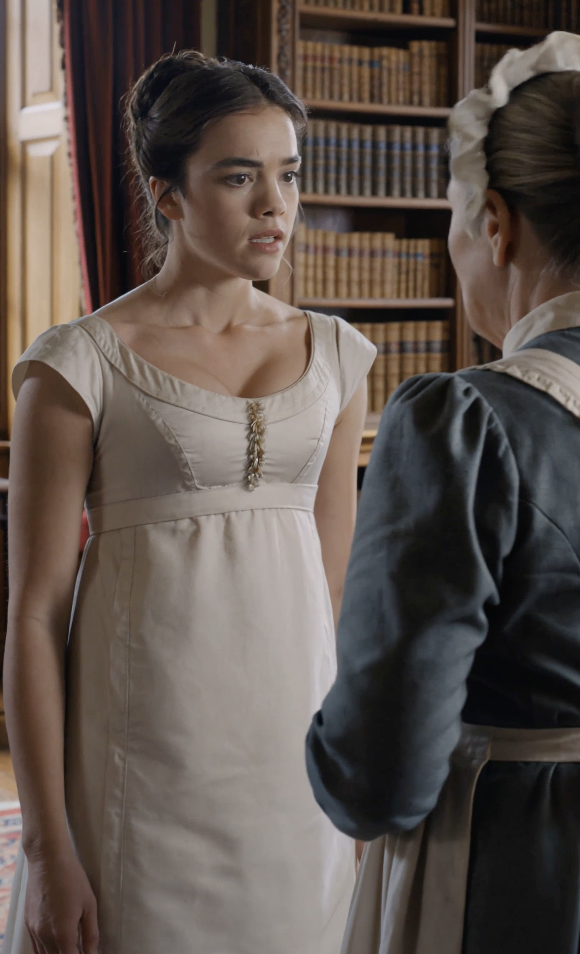
When Eleanor Reed arrived at Blackwood House, she believed she was there for a job.
At twenty-six, she had little left to lose.
Her mother, Anne, had died the previous winter after a long illness, leaving Eleanor with a small suitcase, a few letters, and one strange request made only hours before her death.
“If you ever get the chance to enter Blackwood House,” Anne had whispered, “go to the library. Someone there may finally tell you the truth.”
Eleanor had asked what truth she meant.
Her mother closed her eyes.
“About who you are.”
Those were almost her last words.
Eleanor had grown up in modest rented rooms in northern England. Anne earned money sewing dresses and repairing clothes for wealthy families. She never spoke about Eleanor’s father.
Whenever Eleanor asked, Anne gave the same answer:
“He belonged to a life that was never meant for us.”
So when Eleanor saw an advertisement months later seeking a private secretary at Blackwood House, she applied almost without thinking.
The estate was enormous.
Dark wooden corridors, old portraits, tall windows and rooms that seemed to remember every person who had ever walked through them.
On Eleanor’s first afternoon, an elderly housekeeper named Mrs. Whitmore led her into the library.
The moment the woman saw Eleanor clearly, she stopped.
The keys in her hand began to shake.
“You have her eyes,” she whispered.
Eleanor felt a chill.
“Whose eyes?”
Mrs. Whitmore did not answer.
Instead, she locked the library door.
Then she walked toward an old cabinet and removed a small leather case hidden behind several books.
Inside was a faded photograph.
Eleanor stared at it.
A young woman sat beside a window holding a baby against her chest.
The woman was Anne.
Much younger, but unmistakably Anne.
And behind her was the same library where Eleanor was standing.
“What was my mother doing here?”
Mrs. Whitmore’s eyes filled with tears.
“She lived here.”
Eleanor could barely breathe.
Twenty-seven years earlier, Anne Reed had worked at Blackwood House as a companion to Lady Margaret Ashford.
The eldest son of the family, Charles Ashford, had just returned from university.
Charles and Anne fell in love.
Not a passing romance.
Not a secret affair that lasted a few weeks.
They planned to marry.
But Charles’s father, Lord Ashford, considered Anne completely unsuitable for his son. Charles was expected to inherit the estate and marry into another wealthy family.
When Anne became pregnant, everything changed.
Charles wanted to leave Blackwood with her.
Before they could go, his father intervened.
He sent Charles to Scotland on supposed family business.
Then he told Anne that Charles had changed his mind.
He gave her money and ordered her to disappear before anyone discovered the pregnancy.
Anne refused the money.
She waited for Charles.
But Charles never returned.
“What happened?” Eleanor whispered.
Mrs. Whitmore looked down at the photograph.
“Your mother believed he had abandoned her.”
The truth was much worse.
Lord Ashford had intercepted every letter Anne sent to Charles.
And every letter Charles sent to Anne.
Charles was told that Anne had taken money and left willingly.
Anne was told that Charles wanted nothing more to do with her.
Two people who loved each other spent the rest of their lives believing they had been rejected.
Eleanor felt anger rise inside her.
“Did my father ever know about me?”
Mrs. Whitmore shook her head.
“Not until much later.”
Eleanor froze.
“What do you mean?”
Before the housekeeper could answer, the library door suddenly opened.
A man in a dark formal coat stood in the doorway.
Eleanor recognized him immediately.
Thomas Ashford.
The current owner of Blackwood House.
He was thirty-four and had been the person who approved her employment.
But the expression on his face was nothing like the calm, distant expression Eleanor had seen before.
He was staring at the photograph.
Then at Eleanor.
“So it’s true,” he said quietly.
Eleanor stepped back.
“What is true?”
Thomas entered the room and closed the door behind him.
“My father spent the final years of his life looking for you.”
The words hit Eleanor like a physical blow.
Thomas explained everything.
Charles Ashford had eventually married another woman after being convinced that Anne had abandoned him.
Years later, that marriage produced one son: Thomas.
But shortly before Lord Ashford died, Charles found a locked box among his father’s private papers.
Inside were dozens of letters.
Anne’s letters.
Charles’s letters.
And one document mentioning the birth of a baby girl.
Eleanor.
By then, Anne had disappeared completely.
Charles searched for her for almost six years.
He hired investigators.
He visited old addresses.
He contacted hospitals and churches.
But Anne had changed towns repeatedly and eventually stopped using her original surname after marrying briefly when Eleanor was still a child.
Charles never found them.
He died two years before Anne.
“He knew I existed?” Eleanor asked, tears running down her cheeks.
“Yes,” Thomas said. “And he never forgave himself for finding out too late.”
Thomas then reached inside his coat.
He placed a bundle of letters on the table.
The oldest was addressed to Anne.
The newest was addressed to Eleanor.
It had never been sent.
Her hands trembled as she opened it.
“My dear daughter,
I do not know what name you have now, where you live, or whether you would ever wish to meet me.
But if this letter reaches you, I need you to know one thing.
Your mother was never abandoned by me.
I loved her.
I simply allowed another man’s lies to become stronger than my trust.
For that, I lost her.
And I lost you.
If you hate me, I will understand.
But please never believe that you were unwanted.”
Eleanor could not continue reading.
She pressed the letter against her chest and cried for the father she had spent her entire life believing had never cared.
Thomas stood silently beside her.
Then Eleanor asked the question she feared most.
“Why did you hire me?”
Thomas hesitated.
“Your surname caught my attention. Then I saw your application photograph.”
He looked toward the old picture.
“You look almost exactly like Anne.”
Thomas had invited Eleanor to Blackwood hoping to discover whether she might be the woman his father had searched for.
A private investigation and birth records confirmed the truth several days later.
Eleanor was Charles Ashford’s daughter.
Thomas was her half-brother.
But there was no battle over money.
No cruel attempt to send her away.
Thomas had grown up watching his father live with regret. He wanted the truth known.
Charles’s will had even contained instructions that if his missing daughter were ever found, part of his personal estate should pass to her.
Eleanor accepted only enough money to create the life her mother had never been allowed to have.
She did not move into Blackwood House.
Instead, she restored a small unused building on the estate and opened a school where girls from poor families could learn reading, mathematics and practical skills without paying tuition.
Mrs. Whitmore lived long enough to attend the opening.
Thomas and Eleanor slowly became a real family.
Not because a document said they shared a father, but because they chose to become brother and sister after spending their entire lives as strangers.
Years later, Eleanor placed the photograph of Anne and the baby in the entrance hall of the school.
Beside it she placed the final letter from Charles.
She never tried to pretend the past had ended happily.
Anne and Charles had lost their chance.
They never saw each other again.
But their daughter refused to let the lies that separated them define another generation.
Eleanor eventually married, had two children and remained close to Thomas for the rest of her life.
And whenever her children asked about the woman in the old photograph, Eleanor told them everything.
Not only about betrayal and lost years.
But about the lesson her parents had paid an unbearable price to teach her:
when you love someone, never allow pride, fear or another person’s words to replace the truth you could have asked for yourself.
Because sometimes one honest conversation can save a lifetime.
And sometimes silence can steal one forever.