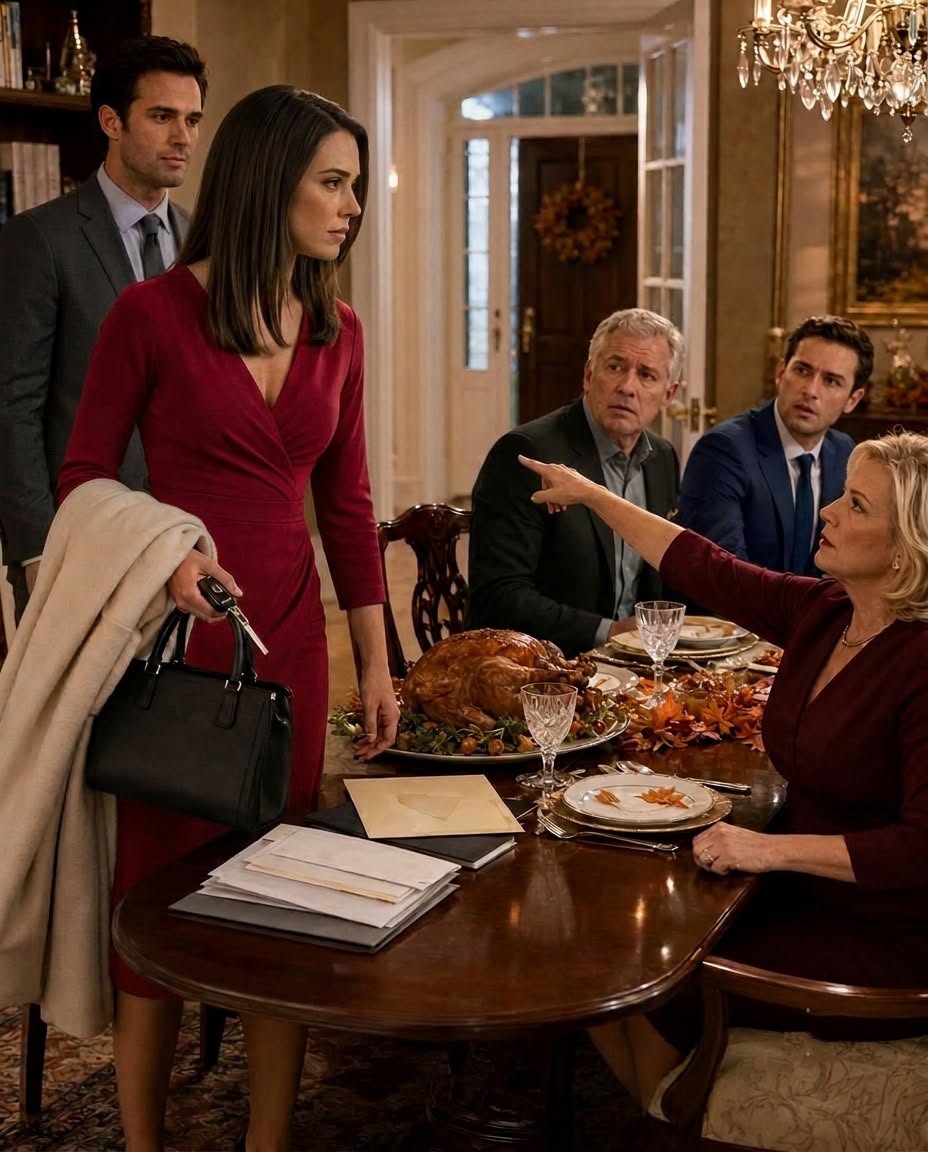
At Thanksgiving dinner, my mother finally said out loud what my family had believed for years.
“Your job is to work while your brother gets the freedom to build something. If you don’t like it, there’s the door.”
I was twenty-nine, worked as a portfolio manager in Manhattan, and had spent years being “the dependable one.”
My older brother Carter was the dreamer.
He launched one business after another, and whenever they failed, someone else covered the damage.
Usually my parents.
Eventually, me.
That night, Carter announced his latest idea and asked me for $100,000.
I said no.
My mother immediately reminded me that I had a stable income, no children, and “more flexibility.”
Then she pointed toward the hallway.
“If helping your brother is such a burden, you know where the door is.”
For years, I had quietly helped my parents pay property taxes, credit-card bills, home repairs, and other expenses they always described as temporary.
Suddenly, I understood.
None of it was temporary.
They had simply built their lifestyle around the assumption that I would keep paying.
So I stood up.
“Fine. I’ll leave.”
Then I picked up my purse and added:
“And starting tomorrow, you can pay your own bills.”
The room went silent.
The next morning, I canceled every voluntary payment I had been covering.
No angry calls.
No revenge.
Just a few clicks.
Autopay removed.
Card disconnected.
Payment canceled.
My father called that afternoon.
“We planned our budget around your money.”
That sentence told me everything.
But two weeks later, I found something worse.
My parents had taken out a $225,000 home-equity line months earlier.
Most of the money had gone to Carter.
They had borrowed against their house to finance another one of his businesses.
When I asked whether a lawyer or accountant had reviewed the deal, my father admitted that no one had.
“We trust our son,” he said.
That was when I finally understood the real problem.
It wasn’t just Carter.
It was an entire family system built around the idea that no matter how reckless everyone else became, I would always clean up the mess.
This time, I didn’t.
My parents cut their expenses.
Carter had to postpone his launch and find real investors.
And I stopped treating other people’s poor decisions like my responsibility.
Nothing collapsed.
They simply had to start carrying the weight they had spent years handing to me.
For the first time in my life, saying no didn’t feel cruel.
It felt like freedom.