For forty-two years, Mr. Chen repaired shoes in the same tiny shop across from the school.
He had never become rich.
His wife used to joke that he earned just enough to keep other people walking.
After she died, the workshop became his whole life.
There was one rule he never changed:
If a child needed shoes for school but could not pay, Mr. Chen found a pair anyway.
He knew what it meant to be ashamed of poverty.
As a boy, he had once been sent home because his shoes were held together with string. He still remembered the laughter of his classmates more clearly than the hunger he felt that day.
So he promised himself that no child would leave his shop feeling the same way.
Over the decades, he repaired hundreds of shoes for free.
Most children never returned.
Mr. Chen never expected them to.
Kindness, he believed, was not a loan.
Then, at seventy-three, his life began to collapse.
The building had been sold to a development company. His rent tripled. A final notice arrived: unless he paid several months in advance, he had thirty days to leave.
Mr. Chen folded the letter and placed it beneath the counter.
He told no one.
He simply kept working.
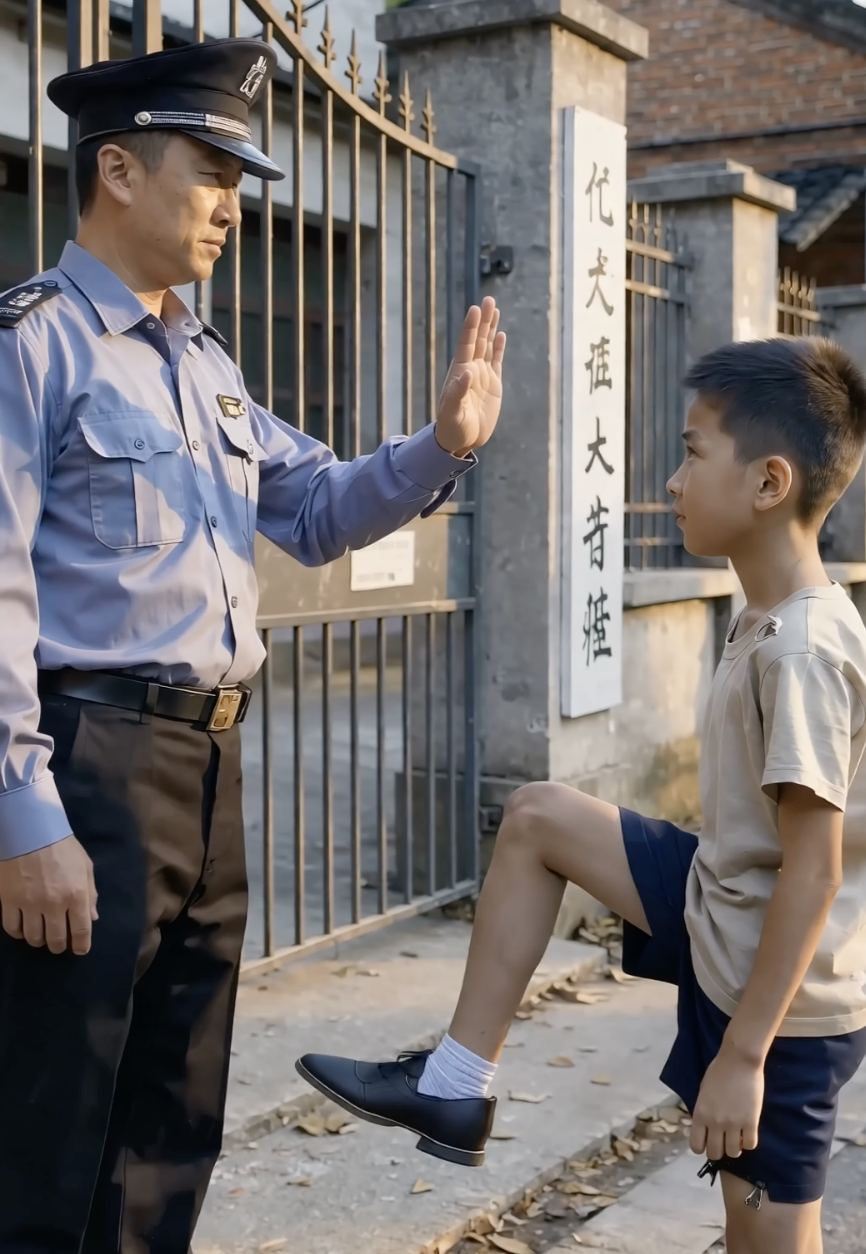
One morning, a boy named Leo stood outside the school gates.
His mother worked nights cleaning offices. His father had died two years earlier, and every spare coin went toward rent and food.
Leo’s school shoes had finally split at the sole.
He tried to hide the damage.
The guard noticed.
— You can’t go in like that.
Leo lowered his head as other students passed.
He did not argue.
He simply turned around.
Mr. Chen had seen everything from across the street.
— Boy! Come here.
Leo hesitated, then entered the workshop.
Mr. Chen looked at his shoes.
— These have fought their last battle.
Leo gave a weak smile.
— My mother gets paid Friday.
— Good. Then on Friday she can buy you lunch.
The old man reached up and took down a pair of brown leather shoes.
They were simple, but new.
— Try these.
Leo’s eyes widened.
— I can’t afford them.
— I didn’t ask if you could.
— I’ll pay you back.
Mr. Chen shook his head.
— No. One day, when you can help someone who needs it, do that instead.
The shoes fit perfectly.
For the first time that morning, Leo smiled.
He ran back toward the school.
Mr. Chen watched until he disappeared through the gate.
Then he returned to his bench.
He had just picked up his tools when a young man in a white shirt entered carrying a folder.
Mr. Chen’s smile vanished.
He assumed the company had come to remove him early.
— I still have three weeks.
The man stopped.
— Mr. Chen?
— Yes.
He placed several documents on the counter.
— My name is David Wu. I represent the company that bought this building.
Mr. Chen looked at the papers but did not touch them.
— Then say what you came to say.
David glanced around the workshop.
Old tools.
Leather scraps.
Rows of carefully polished shoes.
Then he noticed a faded photograph hanging beside the workbench.
A much younger Mr. Chen stood beside a thin boy wearing oversized school shoes.
David stared at it.
— You kept this?
Mr. Chen frowned.
The young man pointed at the boy.
— That’s me.
Silence filled the shop.
Twenty-three years earlier, David had arrived barefoot after his drunken father threw him out of the house.
Mr. Chen had fed him, given him shoes, and contacted a teacher who eventually helped place him with relatives.
David had never forgotten.
— I came back years later, but your shop was closed that day. Then life took me overseas.
He pushed the papers closer.
— Yesterday I saw your name on the tenant list.
Mr. Chen finally looked down.
The document was not an eviction notice.
It was a deed.
David had purchased the small shop from the development company.
— I don’t understand.
— The shop is yours now.
Mr. Chen stared at him.
— I can’t accept this.
David smiled.
— You already paid for it.
— When?
David looked at the old photograph.
— Twenty-three years ago.
Mr. Chen’s eyes filled with tears.
— I only gave you shoes.
— No. You gave a frightened boy proof that he still mattered.
Mr. Chen sat down slowly.
Outside, the school bell rang.
Years later, when Mr. Chen died peacefully at eighty-six, David kept the workshop open.
Above the door, he placed a new sign:
CHEN’S SHOES — NO CHILD WALKS AWAY FOR LACK OF MONEY.
Leo, the boy who had received the brown shoes that morning, eventually became a teacher at the school across the street.
And every year, he quietly paid for shoes for several students whose families were struggling.
None of them knew why.
That was exactly how Mr. Chen would have wanted it.
Because the finest thing he had ever repaired was never a shoe.
It was a person’s belief that the world could still be kind.